
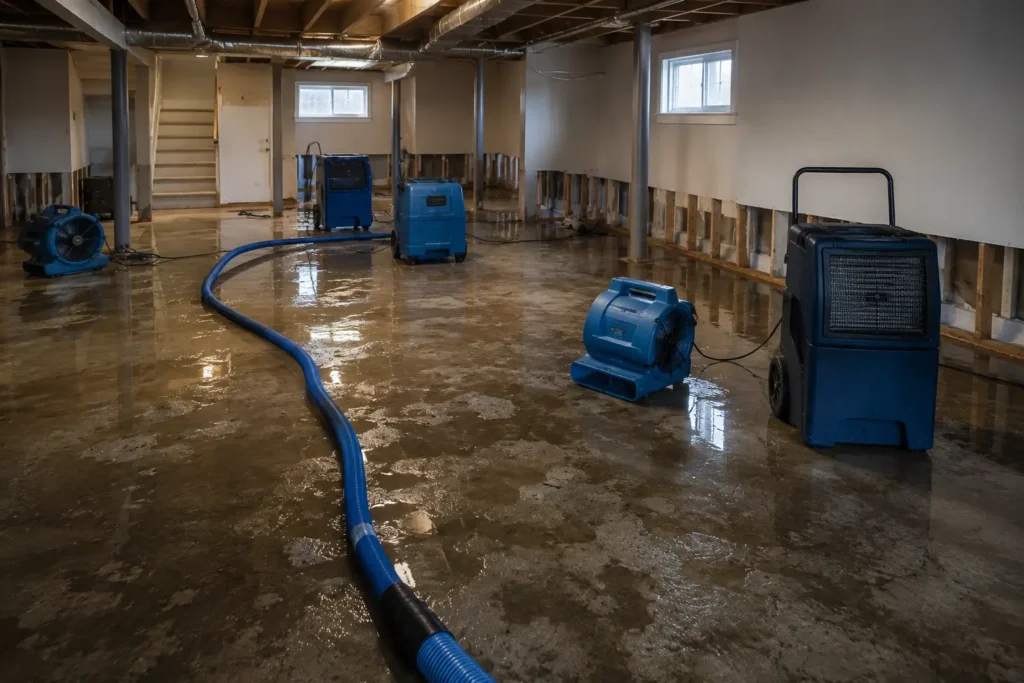
Basement flood damage restoration looks very different depending on where you live. A homeowner in Northfield, Minnesota, dealing with spring snowmelt pushing water through a foundation crack is facing a completely different repair job than a homeowner in Charleston, South Carolina, pumping storm surge out of a crawlspace. The water is the same, but the structures, the timelines, and the risks are not.
Understanding those differences matters, whether you’re trying to figure out why your basement keeps flooding every March, or you’re comparing notes with a friend on the coast who just went through a hurricane season nightmare.
Understanding Flood Damage in Minnesota Basements
Minnesota basements are built to handle cold, not water. Poured concrete foundations, sump pumps, and below-grade living spaces are standard here, which means when flooding happens, it usually comes from below, groundwater pressure, a failed sump pump, or snowmelt seeping through hairline foundation cracks. Basement flood damage restoration in this climate is a race against saturation. Concrete and drywall soak up moisture fast, and if a basement sits wet for more than 24 to 48 hours, mold becomes a real concern even in cold weather, since finished basements trap humidity indoors.
The bigger challenge is that a lot of Minnesota basements are finished living spaces, bedrooms, family rooms, home offices. That means restoration isn’t just about drying concrete, it’s about saving flooring, drywall, and furniture that were never designed to handle water exposure in the first place.
How Basement Flooding Differs From Coastal Water Damage
Coastal flooding, like what hits Charleston homes during hurricane season, usually comes from above and from the outside in storm surge, heavy rainfall overwhelming drainage, or wind-driven rain forcing its way through roofing and window seals. Homes in coastal regions are often built on crawlspaces or slabs rather than full basements, so the water damage spreads horizontally through walls and flooring rather than pooling in one below-grade area.
Salt water adds another layer of complexity that Midwest restoration crews rarely deal with. It corrodes metal fixtures, wiring, and HVAC components far faster than fresh water, which changes both the repair approach and the timeline. If you’re comparing restoration guides, it’s worth checking a resource focused specifically on flood damage restoration Charleston homeowners rely on for coastal-specific repair steps, since the process really doesn’t translate one-to-one from a Minnesota basement job.
The Restoration Timeline After a Flood
Regardless of geography, the first 24 to 48 hours after a flood determine how much of the structure can be saved. Water extraction has to happen immediately, followed by industrial dehumidification and air movement to prevent mold colonization. In Minnesota, cold ambient temperatures can actually slow evaporation, which means drying equipment often has to run longer than it would in a warmer climate.
After drying, the assessment phase decides what stays and what goes. Drywall that’s absorbed water past a certain point almost always needs to be cut out and replaced, and any insulation behind it usually can’t be salvaged either.
Damage Restoration Services in Northfield, MN
When your basement floods, damage restoration northfield homeowners trust starts with fast water extraction, not a delayed callback. Our water damage restoration northfield team handles everything from a sump pump failure to a full storm-driven flood, backed by our water restoration northfield mn process for drying and structural assessment.
Commercial Storm and Water Damage Restoration in Northfield
Businesses need a different approach than homes. Our commercial storm damage restoration northfield service works around your operating hours, and commercial water damage restoration northfield covers everything from a burst pipe to sewage backup. We also handle commercial water damage northfield cleanup with the same urgency as residential jobs. See our full basement flooding repair chaska mn coverage for the same-day response Chaska homeowners rely on.
Serving Burnsville and Eden Prairie, MN
Beyond Northfield, we provide basement flooding repair burnsville mn and basement flooding repair eden prairie mn service, using the same certified process and 24/7 emergency response.
Water Damage Restoration and Emergency Response in Northfield, MN
When you’re searching for water damage restoration northfield homeowners trust, response time is everything. Standing water spreads to walls, subfloors, and belongings within hours, so our damage restoration northfield team prioritizes emergency water removal northfield calls above routine scheduling, arriving fast whether the cause is a burst pipe, storm flooding, or a failed sump pump.
Our full water restoration northfield mn process starts with extraction, followed by structural drying and a moisture check behind walls and under flooring, since water damage that isn’t fully dried often leads to mold within 24 to 48 hours.
Businesses face different pressures than homeowners, which is why our commercial water damage restoration northfield service works around operating hours to minimize downtime. We also handle commercial storm damage restoration northfield after high winds or heavy rain, and commercial water damage northfield cleanup for offices, retail spaces, and warehouses across the area.
Beyond Northfield itself, we extend the same certified process to nearby communities, including basement flooding repair burnsville mn and basement flooding repair eden prairie mn, so homeowners in those areas get the identical 24/7 response and documented cleanup process.
Preventing Future Basement Flooding in Minnesota Homes
Prevention comes down to a few practical steps that most Northfield homeowners overlook until after the first flood. A properly maintained sump pump with battery backup is non-negotiable, especially during spring thaw when power outages and heavy snowmelt tend to happen together. Grading around the foundation should slope away from the house, not toward it, and gutters need to be clear so water isn’t dumping straight down next to the foundation wall.
For homeowners who want a deeper look at drying techniques and moisture control specific to below-grade spaces, our guide on basement water removal breaks down the equipment and process step by step. It’s also worth reviewing foundation crack repair options before another wet season arrives, since sealing small cracks early is far cheaper than restoration after the fact.
The Federal Emergency Management Agency also publishes flood preparedness guidance that’s useful for homeowners in any climate, including practical checklists for protecting a home before a flood event happens, you can find that at ready.gov/floods, which covers both prevention and post-flood safety steps.
Choosing the Right Flood Damage Restoration Team in Northfield, MN
Not every restoration company understands the specific challenges of a Minnesota basement. Freeze-thaw cycles, below-grade humidity control, and finished basement reconstruction all require different expertise than a standard water cleanup job. When you’re vetting a basement flood damage restoration company, ask specifically about their experience with finished basements and their equipment for below-grade drying, since general water damage experience doesn’t always translate to basement-specific work.
For homeowners dealing with an active flood right now, response time matters more than almost anything else. Call (507) 853-2142 for immediate assistance, or check our emergency water damage response page to see what to expect when you call and how quickly a crew can get equipment running in your basement.
Flooding is stressful no matter where you live, but the fix isn’t the same everywhere. Whether it’s a Minnesota basement fighting groundwater pressure or a Charleston home recovering from storm surge, getting the right restoration approach for your specific structure, not a generic one, is what actually prevents the second round of damage: mold, structural rot, and the kind of repeat flooding that turns into a recurring expense.
Leave a Reply