
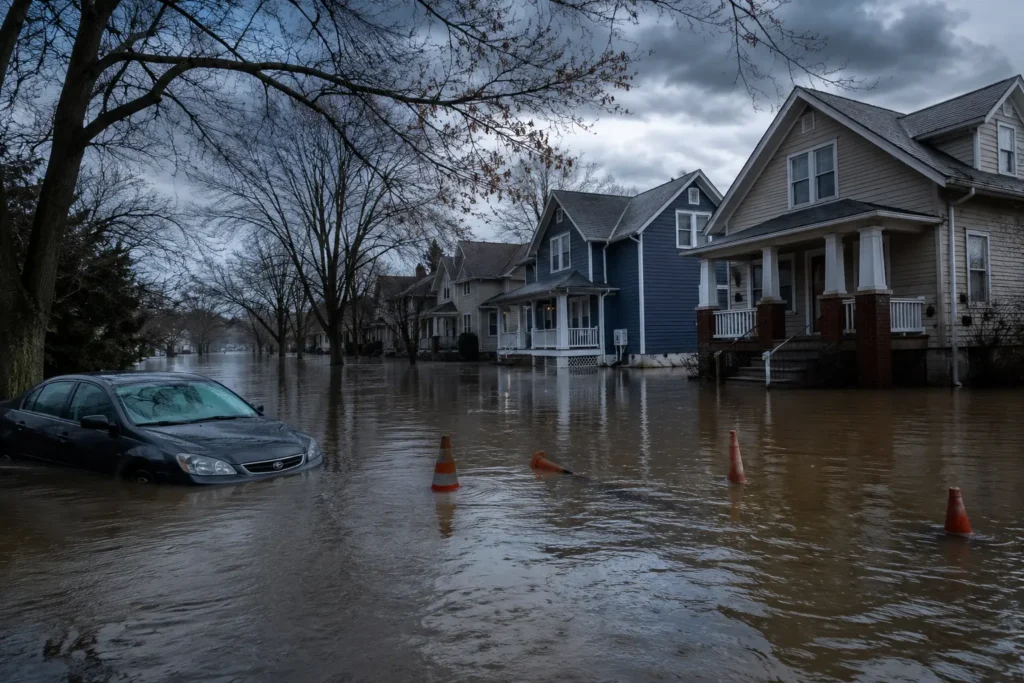
The Midwest is no stranger to water. Every spring – when snowmelt combines with heavy rainfall across Illinois and Minnesota – basements across both states take the hit. Sump pumps run overtime, drainage systems back up, and homeowners wake up to flooded utility rooms, saturated insulation, and standing water that was not there the night before.
Illinois and Minnesota share more than just a regional identity. Both states deal with aging housing infrastructure, flat terrain that slows water runoff, and seasonal flooding patterns that repeat every single year. Understanding why your basement floods – and what to do in the first few hours – can be the difference between a straightforward cleanup and a full structural restoration job.
Why Midwest Basements Flood Every Spring
Spring is the highest-risk season across the Midwest – and the reason comes down to a combination of factors that hit at the same time.
Snowmelt from a long winter saturates the ground before any rain even falls. When spring storms arrive on top of already-saturated soil – water has nowhere to go. It follows the path of least resistance – and for most homes, that path leads straight into the basement through foundation cracks, window wells, floor drains, and utility penetrations.
Both Illinois and Minnesota have large portions of their residential areas built on older foundations that were never designed with modern waterproofing standards in mind. Clay soil – common across both states – expands when wet and contracts when dry – creating constant pressure on foundation walls that slowly develops cracks over years of seasonal cycling.
According to the Illinois State Water Survey – central Illinois experiences significantly above-average precipitation during March through June – making spring the single most dangerous season for basement water intrusion across the region.
Illinois Basement Flooding – Peoria and the Illinois River Effect
In Illinois – no city illustrates the Midwest flooding problem more clearly than Peoria. Situated directly along the Illinois River – Peoria faces a compounding risk that most inland cities do not deal with. When river levels rise during spring runoff – groundwater tables in the surrounding area rise with them – pushing moisture up through basement floors and walls even in homes that sit several blocks from the water.
Peoria neighborhoods built on lower-lying ground face the worst of it. Basement flooding in these areas is not an occasional inconvenience – it is a seasonal expectation for many homeowners. Sump pumps that have not been serviced since last year fail under continuous load. Battery backups that were never installed leave homes unprotected the moment the power goes out during a storm.
The timeline matters enormously in Peoria flood situations. Mold begins establishing itself in warm – humid basement conditions within 24 to 48 hours of initial water exposure. Drywall absorbs moisture within hours. Insulation becomes a breeding ground for mold within days if not properly extracted and dried.
For Peoria homeowners dealing with spring basement flooding – professional flood cleanup Peoria Illinois services provide the industrial-grade extraction, drying, and moisture verification that DIY methods simply cannot match.
Spring sump pump testing before March – and again after the first major storm of the season – is one of the most effective preventive habits any Peoria homeowner can build.
Minnesota Basement Flooding – A Different Climate, The Same Problem
Minnesota faces a similar seasonal pattern – but with its own distinct challenges. Winter in Minnesota is significantly harsher than Illinois – which means the spring thaw releases a larger volume of water over a shorter period. When temperatures rise quickly after a long freeze – the ground cannot absorb snowmelt fast enough – and basement flooding follows rapidly.
Minneapolis, St. Paul, Northfield, and surrounding communities see repeated basement flooding events during April and May every year. Older homes in established neighborhoods have clay tile drain systems that crack and collapse over time – letting groundwater in rather than keeping it out.
Minnesota homeowners also deal with ice dam damage that transitions into basement moisture problems. Water that backs up under roof shingles during winter eventually finds its way into wall cavities – and by spring – that moisture has traveled down into lower levels of the home.
Our basement flood cleanup services are specifically designed for Minnesota’s seasonal flooding patterns – covering everything from emergency water extraction to complete structural drying and mold prevention.
Illinois vs Minnesota – Key Flooding Differences
Both states share the Midwest flooding problem – but the causes and timing differ in important ways –
- Illinois – Spring river flooding and groundwater rise are the primary drivers. Peoria and central Illinois cities face the highest risk due to proximity to the Illinois River system
- Minnesota – Rapid snowmelt and frozen ground create surface flooding that overwhelms drainage systems. Twin Cities metro and southern Minnesota communities face the most repeated flooding events
- Both states – Aging housing stock, clay-based soil, and outdated sump pump systems create conditions where basement flooding is almost inevitable without proper maintenance and preparation
Understanding which type of flooding your home is most vulnerable to helps you prepare the right defenses before the season begins.
Sump Pump Failure – The #1 Cause of Preventable Basement Flooding
Across both Illinois and Minnesota – sump pump failure is the single most common cause of basement flooding that could have been prevented. A sump pump that has not been tested – serviced – or equipped with a battery backup is essentially a liability waiting to activate during the worst possible storm.
Professional sump pump installation services ensure your system is correctly sized for your home’s water table risk – properly installed with a reliable battery backup – and tested before the season begins rather than after the first flood event of the year.
A battery backup system costs a fraction of what a single basement flood cleanup costs – and it keeps your pump running even when power outages hit during severe storms.
Warning Signs Your Basement Is at Risk Before Flooding Begins
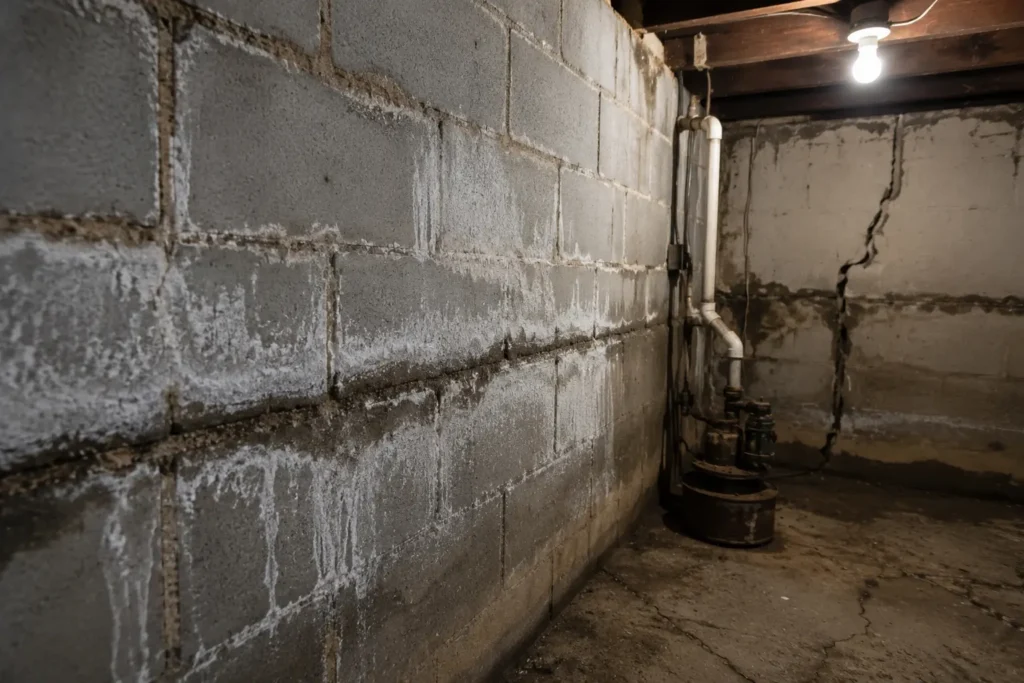
Catching early warning signs before a major flood event gives you the best chance of avoiding serious damage –
- Efflorescence – white chalky mineral deposits – forming along the base of basement walls
- A persistent musty smell – even during dry weather – indicating hidden moisture already present
- Hairline cracks developing along foundation walls or floor joints
- Sump pump running more frequently than usual – even without recent rainfall
- Soft – discolored – or warped flooring near basement walls or in utility areas
- Water staining on lower wall sections that appears and disappears with weather changes
If any of these signs are present before spring flooding season begins – a professional moisture inspection can identify where water is entering and what needs to be addressed before the problem becomes an emergency.
You can check your property’s official flood zone designation using the FEMA Flood Map Service Center – a free government resource that maps flood risk by address across both Illinois and Minnesota.
What To Do the Moment Your Basement Floods
Fast action in the first hour dramatically reduces total damage and recovery cost –
- Shut off electricity to the basement immediately – water near electrical systems creates serious safety hazards
- Locate and stop the water source if it is a burst pipe or appliance failure – close the main shutoff valve
- Move valuables and furniture out of the flooded area as quickly as possible
- Do not walk through standing water without checking for electrical hazards first
- Document all damage with photos and video before any cleanup begins – essential for insurance claims
- Call a certified restoration team within the first few hours – the faster extraction begins – the lower the mold risk
Professional teams bring industrial dehumidifiers, air movers, and moisture meters that verify drying inside wall cavities and under flooring – areas that DIY fans and towels never fully reach.
Final Thoughts – Midwest Homeowners Need a Plan Before Spring Hits
Basement flooding in Illinois and Minnesota is not a surprise – it is a seasonal pattern. What changes year to year is how prepared each homeowner is when it begins.
Test your sump pump before March. Know where your main water shutoff valve is. Get a professional moisture inspection if your basement showed any warning signs last season. And if flooding does occur – act within the first 24 hours rather than waiting to see how bad it gets.
The difference between a minor cleanup and a major restoration project almost always comes down to how fast the right response begins.
Leave a Reply